Archives

New features for my tools: color selection and more lines

My tools for showing segments on a chromosome picture now allow you to pick the colors yourself. Here is an example of the ancestor DNA mapper with some very different color choices from the ones the program would use.

Sample Chromosome Map ColorsHow to pick the colors is documented on the page for each tool.

My ancestor mapping tool:
http://blog.kittycooper.com/tools/chromosome-mapper/

My segment mapper, up to 40 relatives
http://blog.kittycooper.com/tools/segment-mapper/

No changes were made to the one chromosome mapper so if you want color choice on that tool as well just let me know.

Another recent enhancement is that the segment mapping tool now allows you to specify as many lines as you like for relatives in your chromosome picture. See an example in my post about four generations of inheritance.

Another way to triangulate: using close relatives

I have been mainly working with my Dad’s Norwegian DNA at 23andme and at Family Tree DNA. Often he will have a match at one company and there will be a match to someone else on the same segment location at the other company. So how to tell if they match each other? Since one could have the DNA segment that Dad got from his mother and the other could have the segment Dad got from his father, the only way to be sure it is the same segment is if they also match each other on that segment. This is what is known as triangulation.

If they have both uploaded to GEDmatch, I can compare their two kits there and see if they match on that segment. Often however one or the other has not uploaded or the GEDmatch site is down. So I needed another way to figure this out.

It occurred to me that I could check if the new match also matches me there, since my results are at both web sites as well.

Obviously when they both match me on that DNA segment, I know they match each other. If one matches me and the other does not, then I know they are not a match. But what if they both do not match me? Then I must have inherited that segment from one of Dad’s parents and they are matching the DNA piece from his other parent.

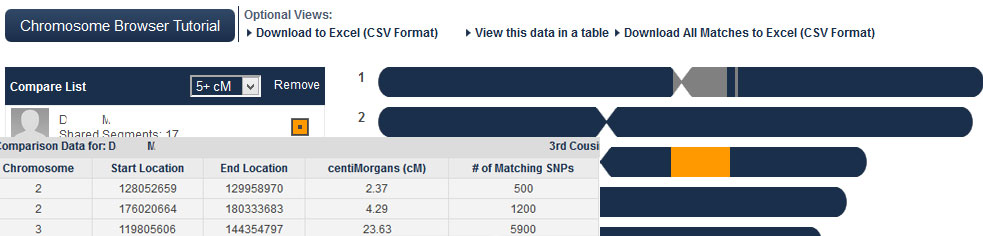
In the case above, Dad has a 23cM match at Family Tree DNA with an adoptee at the same spot where he has many smaller matches over at 23andme. So do those folk match DM?

Continue reading

Etne Endogamy and four generations of DNA for my Norwegian descended cousins

It has been quite surprising to me to see how often 23andme claims Norwegian relatives are more closely related than they in fact turn out to be. This particularly shows up among those descended from the farms around the Stordalsvatnet (a large glacier lake upstream from Etne in Hordaland Norway) such as Skjold, Frette, Tveito, Lussnes, Sande, Hovland, and Håland to name just a few (Click here for a picture towards Frette from google maps).  So when last at the library in Salt Lake City, I photographed pages from the Etnesoga farm books for all these ancestral farms in order to discover the many ways these folk intermarried in recorded genealogical time. I have been entering all this data on GENI and ancestry but have yet to discover good ways to display family trees with so many cousin marriages.

So Dad has an expected 3rd to 4th cousin “MB” from Etne who shares 4 good sized segments and .66% of her DNA with him. She is in fact twice a 4th cousin once removed and once a 6th cousin to him (so far). Most delightful however is that she has four generations of family tested. So here is a picture made with my segment mapper tool of her versus her daughter (.55%), two grandsons (.52% and .38%), a great granddaughter (.39%) and a great grandson (.26%). Clicking on the picture will take you to a copy of the actual output with mouse-over popups showing the centimorgan (cM) values.
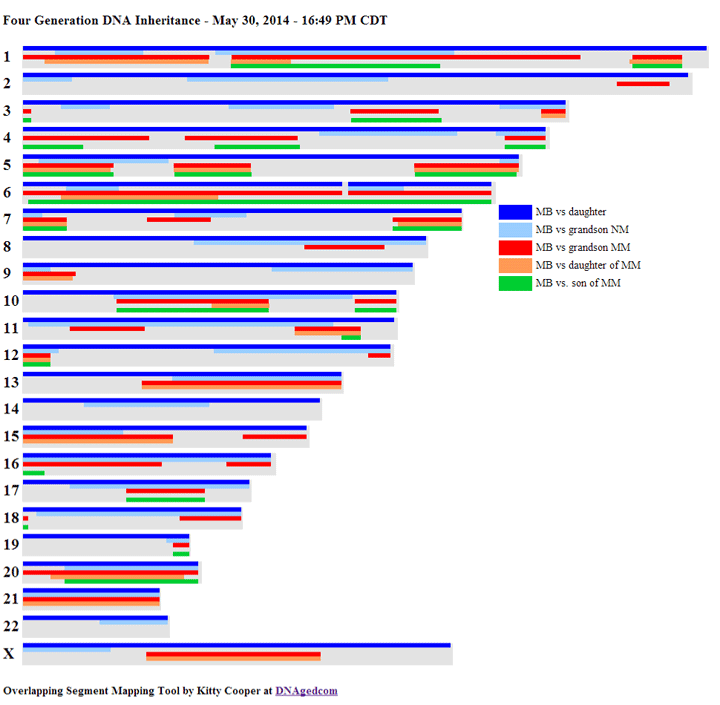
4gensSandeAs expected, her daughter is a solid blue line as she has half of all her DNA, thus one of every chromosome pair, from her mother. Looking at the two sons, you can see that they inherit some of the same DNA and some different. Notice how all of chromosome 21 has been passed intact all the way to her g-granddaughter. This is the smallest chromosome. The X inheritance is also of interest as MB’s daughter gave each son only one piece from her mother, and not the same pieces.

Continue reading

Learning about Genetic Genealogy: Conferences, Courses, and more


Cece Moore
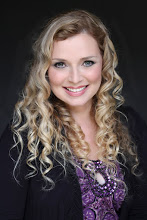
If I were just starting to learn about genetic genealogy now, I think I would sign up for the Institute of Genetic Genealogy’s conference in Washington this August organized by two of the leaders in this new field: Cece Moore (pictured to the left) and Tim Janzen. Immersion always works best for me.

If I could not make that, then I would try DNA day at the Southern California Genealogical Society Jamboree in June.

In the meantime I might attend the Google+ hangout from 23andme Genetic Genealogy Basics, on May 22 at 12PM PST (3PM EST) (details at http://throughthetreesblog.tumblr.com/post/85927430757/hangout-with-23andme-genetic-genealogy-basics )

Then there are also a number of online courses to take:

Continue reading

Klotho – a gene for longevity and better brain function as you age

A recent discovery in the news is the Klotho gene which seems boost brain function and adds to longevity. About one in five people have the good variant.

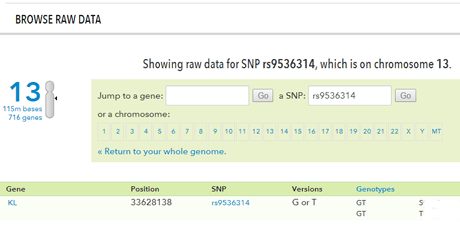
KLsnpIf you tested at 23andme, you can find out if you have it by checking the SNP at rs9536314, the protective variant is the heterozygous one, GT, while the normal variant is TT. The homozygous version, GG, appears to be deleterious.

So log into your 23andme account and then click this URL to see if you have the GT  version is
https://you.23andme.com/tools/data/?query=rs9536314&filter_by_platforms=true

Here are a few informative news articles explaining this discovery:
http://www.ucsf.edu/news/2014/05/114196/better-cognition-seen-gene-variant
http://www.medicalnewstoday.com/articles/276665.php

Now to get more technical.

Continue reading