The name Auschwitz has always epitomized the horror of the holocaust to me but I actually knew very little about the place. Recently I found myself with a few spare days in Katowice, Poland, so since it was nearby, with much trepidation. I signed up for a tour. One thing I had not known was that there was more than one camp at Auschwitz. The one with the famous sign shown below, “work sets you free,” was the first camp, the parent camp while Auschwitz II, better known as Birkenau, was about 8.5 times larger and was designed to be a factory for murder.
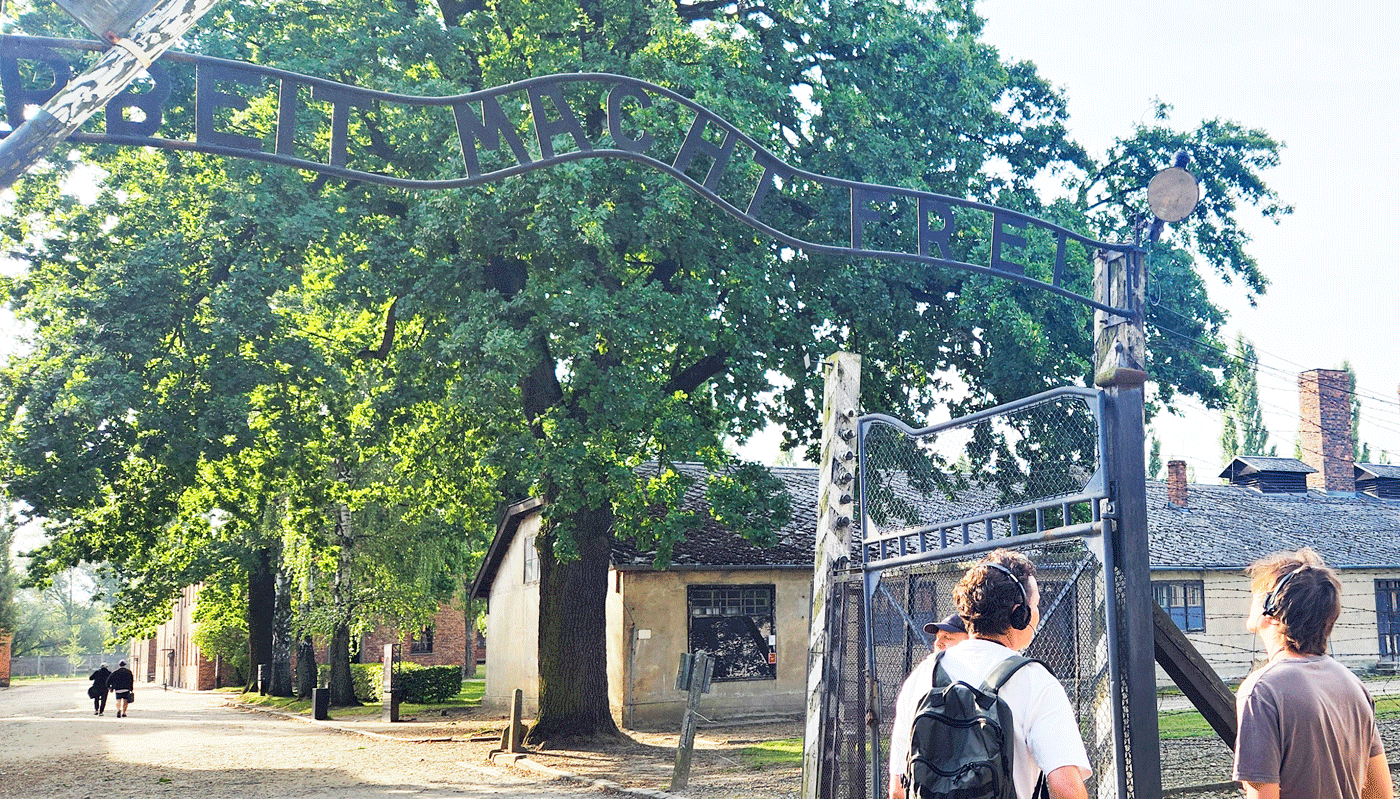
Entrance to Auschwitz I
The original Auschwitz was a mere 49 acres and at first held German and Polish prisoners who had to rebuild the dilapidated camp which had been previously used as an army barracks among other things. It included the infamous torture building (block 11), the killing wall, and a “hospital” building. We toured the gas chambers and crematorium as well as living spaces and museum displays.
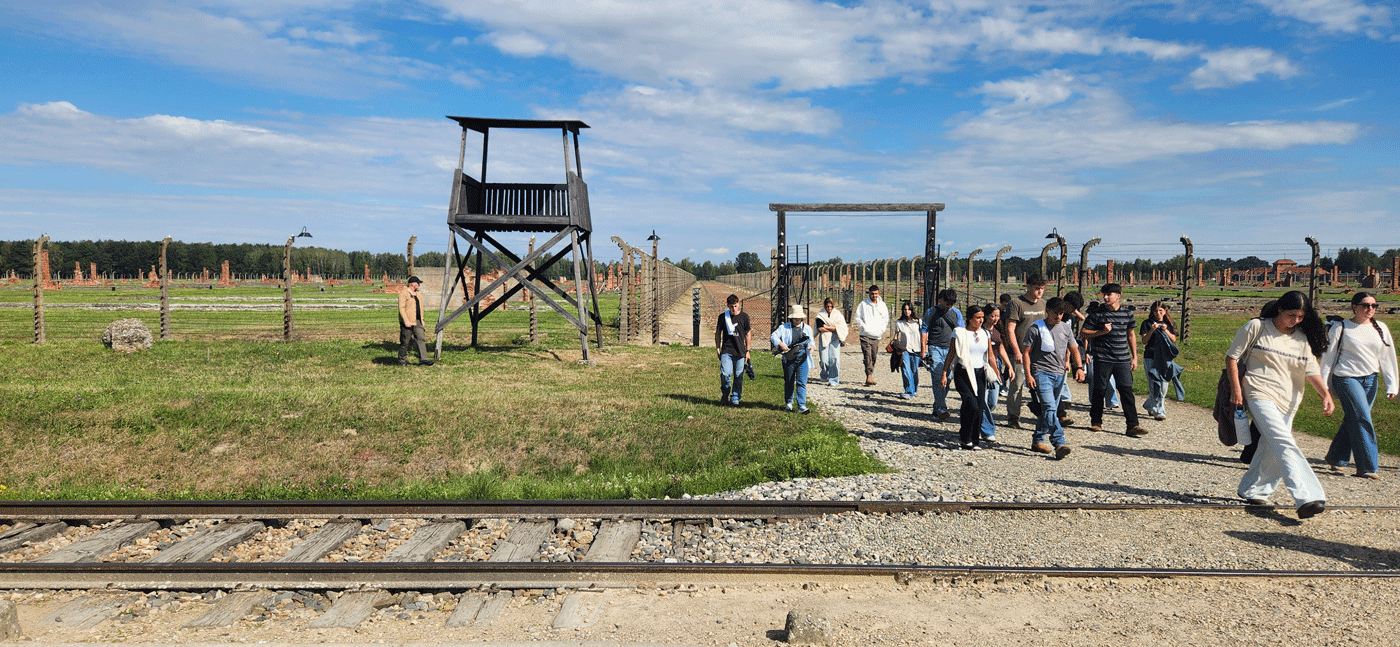
The selection point by the tracks at Birkenau
At Birkenau, the trains came directly into the camp where they were unloaded and people were selected. About 90% went directly to their deaths. They were sent to the “showers” where they undressed and then went in. The doors were then locked and the gas came in …
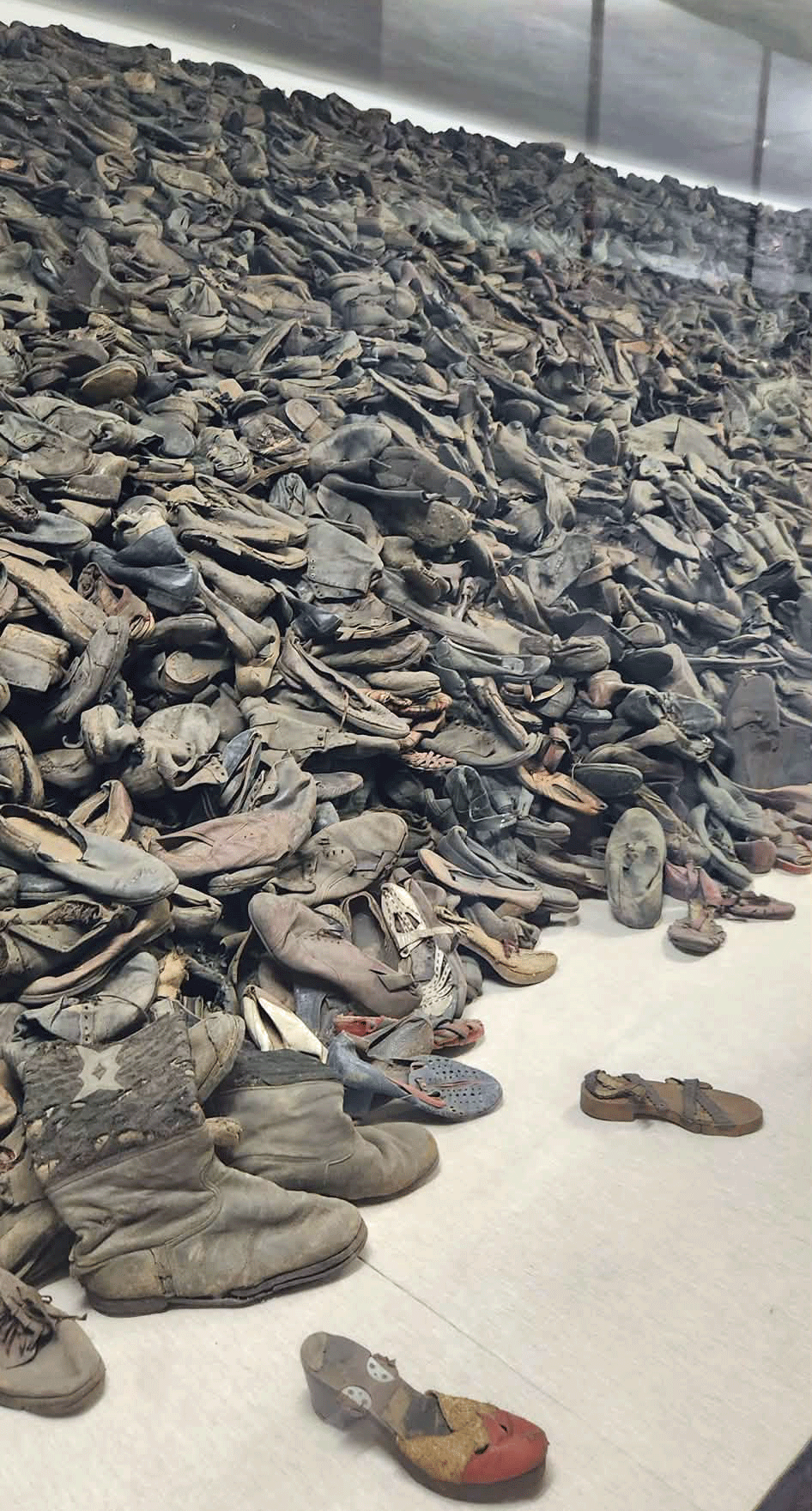
Part of the shoe exhibit
The current estimate of the number of people killed at both these camps is 1.1. million of which 1 million were Jewish, the others being Polish, Romani, and Russian prisoners of war. Such large numbers are hard for me to get my head around so I did a few conversions. 1.1 million minutes is about 764 days. 1.1 million days is about 3014 years.
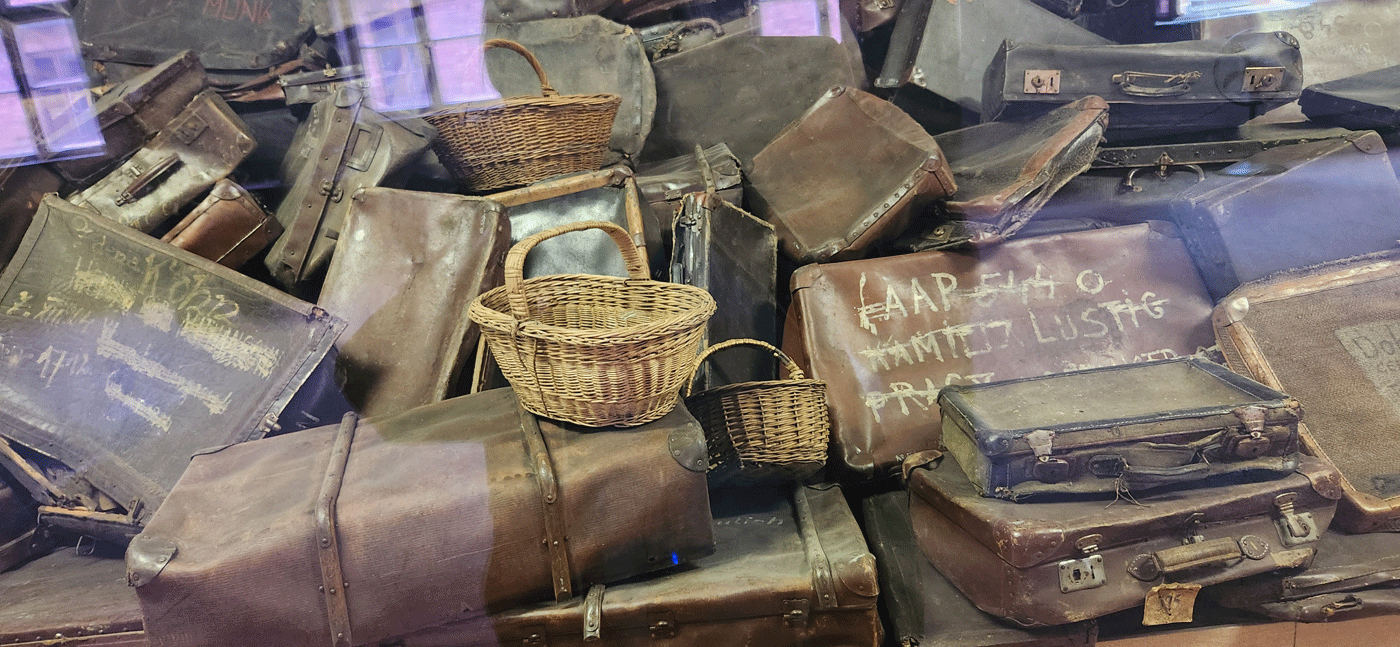
The museum created at the original camp gives a feel for the enormous number of killings with displays of shoes, luggage, and hair collected from the victims. Women had their heads shaved and the hair was collected and shipped back to Germany where it was used to create fabrics like felt; photos were not allowed of the hair but here are images of the shoes and luggage. A way to try to show the magnitude of the deaths.
Historically there have been many genocides (for example Rwanda, Cambodia, Armenia) as per this Wikipedia article (click here). Defining some people as subhuman and “not like us” and then blaming them for various problems, thus not worthy of living, seems to be a human failing that has occurred far too many times.
I bought two books in the gift shop to try to better understand what happened at these camps. One thing that really struck me in the book Auschwitz by Laurence Rees, a former Head of BBC TV History programmes, was that the former SS guards that he interviewed still thought they had done the right thing; they felt no remorse. Amazon describes the book as sharing “insights from more than 100 original interviews with survivors and Nazi perpetrators who speak on the record for the first time.”
All in all, a very sobering experience.
Thank you.
Thank you for this interesting and poignant description of Auschwitz. It is fascinating to see the photographs. I have Silesian and Moravian heritage and once crossed over the border into Poland while visiting the area. I realize that I did not know the location of Auschwitz. Not long ago I watched the movie Nuremberg about the US military psychiatrist who evaluated the Nazi leaders prior to the trials. Thought-provoking.
Thank you, Cousin.