Archive by Author | Kitty

Learning about Genetic Genealogy: Conferences, Courses, and more


Cece Moore
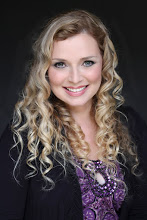
If I were just starting to learn about genetic genealogy now, I think I would sign up for the Institute of Genetic Genealogy’s conference in Washington this August organized by two of the leaders in this new field: Cece Moore (pictured to the left) and Tim Janzen. Immersion always works best for me.

If I could not make that, then I would try DNA day at the Southern California Genealogical Society Jamboree in June.

In the meantime I might attend the Google+ hangout from 23andme Genetic Genealogy Basics, on May 22 at 12PM PST (3PM EST) (details at http://throughthetreesblog.tumblr.com/post/85927430757/hangout-with-23andme-genetic-genealogy-basics )

Then there are also a number of online courses to take:

Continue reading

Klotho – a gene for longevity and better brain function as you age

A recent discovery in the news is the Klotho gene which seems boost brain function and adds to longevity. About one in five people have the good variant.

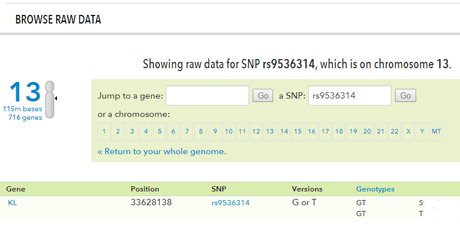
KLsnpIf you tested at 23andme, you can find out if you have it by checking the SNP at rs9536314, the protective variant is the heterozygous one, GT, while the normal variant is TT. The homozygous version, GG, appears to be deleterious.

So log into your 23andme account and then click this URL to see if you have the GT  version is
https://you.23andme.com/tools/data/?query=rs9536314&filter_by_platforms=true

Here are a few informative news articles explaining this discovery:
http://www.ucsf.edu/news/2014/05/114196/better-cognition-seen-gene-variant
http://www.medicalnewstoday.com/articles/276665.php

Now to get more technical.

Continue reading

How many ancestors did I have 1000 years ago?

Powers2Someone recently posed the question “How many ancestors did I have 1000 years ago?” in conjunction with the assumption that the various genetic origins programs include about 1000 years worth of ancestry … my answer, of the billion possible maybe a million, maybe far fewer …

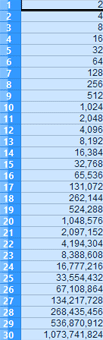
Very simply, if you postulate that 1000 years was 30 generations ago then your theoretical number of ancestors is two to the 30th, or just over a billion: 1,073,741,824. This is impossible as nowhere near that many people were alive back then. Plus not everyone who lived a thousand years ago has descendants today. So your ancestors must be duplicated numerous times on your family tree; this is known as pedigree collapse. Brian Pears points out in his article The Ancestor Paradox, that “even if every marriage in every generation was between second cousins, a quite unbelievable situation, we would still run out of people to be our ancestors within 29 generations.”

Kenneth W. Wachter came up with an interesting mathematical model for this, described in Stephen Lewis’ blog post How many ancestors do I have. To somewhat paraphrase, “Going back 30 generations… Wachter’s model calculates that [an Englishman] would have 952,279 distinct ancestors in 1077 – only around 0.09% of the maximum but representing fully 86% of the total estimated English population [at that time] of 1.1 million.”

More recently (1999), Yale statistician Joseph Chang wrote a paper analyzing pedigree collapse that postulated that we Europeans all have a common ancestor who lived in about 1400 AD. Warning, that paper has lots of math in it.

Continue reading

The myOrigins feature at familytreeDNA

Family Tree DNA has come out with a great way of showing your genetic ancestry for the last several thousand years using a clickable feature-filled map called “myOrigins.” It is listed in the submenu under “Family Finder” on the main menu. You have to have done the Family Finder test, or transferred your autosomal data from elsewhere, to have this feature.

Their data shows that DNA has specific signatures in geographic clusters rather than by modern countries, so your origins are shown in terms of those clusters. In my own case, I am half Norwegian from my Dad and half German from my mother where half of that German was Jewish. I know from other testing companies that I got well more than 25% of my jewish grandfather’s DNA, so I was not surprised to see Jewish Diaspora listed at 32% as 23andme says I have 27% Ashkenazi. Here is the myOrigins picture for me from my transferred 23andme data.

myOrigins Kitty Cooper

My Genetic Heritage as shown in myOrigins at familytreeDNA

The bottom left box shows your relatives’ percentages in your top three clusters. You can click on any relative to show the location on the map for their furthest back maternal and paternal ancestor (if they have entered that information). Clicking the green (maternal) and red (paternal) dots on the far bottom right will put pins on the map for the furthest back maternal and paternal ancestor locations for all your closest matches who have entered that information. Click on a pin to see the person’s name. Click the red or green dots again to get rid of those pins.

To see a little historical explanation of a specific population cluster you have to expand the larger cluster, for example European, in the box on the top left, and then click on a specific cluster like “European Coastal Plain.” Then some information will be displayed in the bottom left box, under the “My Ancestry History” tab.

Here is part of what it says about my Northlands cluster, “The European Northlands centers on the people of Scandinavia. They thought of their homeland as an island because it is relatively isolated from the rest of the world by the Baltic and other seas. This isolation and later association with the Finnic peoples, however, have changed them in ways that are genetically clear. A sister cluster to European Coastal Plain and European Coastal Islands, the European Northland has developed in moderate seclusion, influenced by the arctic heritage it shares with those from the North Circumpolar cluster.” Since I am shown as well more than half Northern, I have to assume some of that came to my German side as well.

To better understand how to use all the features, I did the online seminar about myOrigins which can be found at the ftDNA library of webinars located at https://www.familytreedna.com/learn/ftdna/webinars/. It was easy to sign up for it and download it and then play it in the “Windows Media Player” where it worked perfectly.

Continue reading

Keeping my mailing list emails out of gmail’s spam folder

The other day I found dozens of emails from my various genealogy and DNA mailing lists in my spam folder.  This was most annoying. In many email programs you can put email addresses on a “white list” so that they do not go to spam. With Gmail you need to use the filter function to make sure that emails from your lists never go to spam. Here’s how.

FIlterThese

  1. Open a message from the mailing list
  2. Click on the More button above the emails to get a menu with “Filter messages like these” and click on that.
  3. Another box will come up with the sending email or words that identify this message type

Continue reading